Keys that never existed. Wallets that never stop.
MPC-generated key shares, distributed across enclaved nodes, controlled by your governance, deployable in our cloud, your cloud, or your data center. Zero seed phrases. Zero key losses. Zero compromise across six years.
DFNS provided the secure wallet infrastructure we needed to launch our digital asset custody service for institutional clients.
Read the full storyEach key exists only as MPC shares distributed across independent enclaves. The complete key is never assembled, never stored, never exportable.
No BIP-39 mnemonic. No HD derivation. No piece of paper to lose. Each key's shares are generated independently inside enclaves.
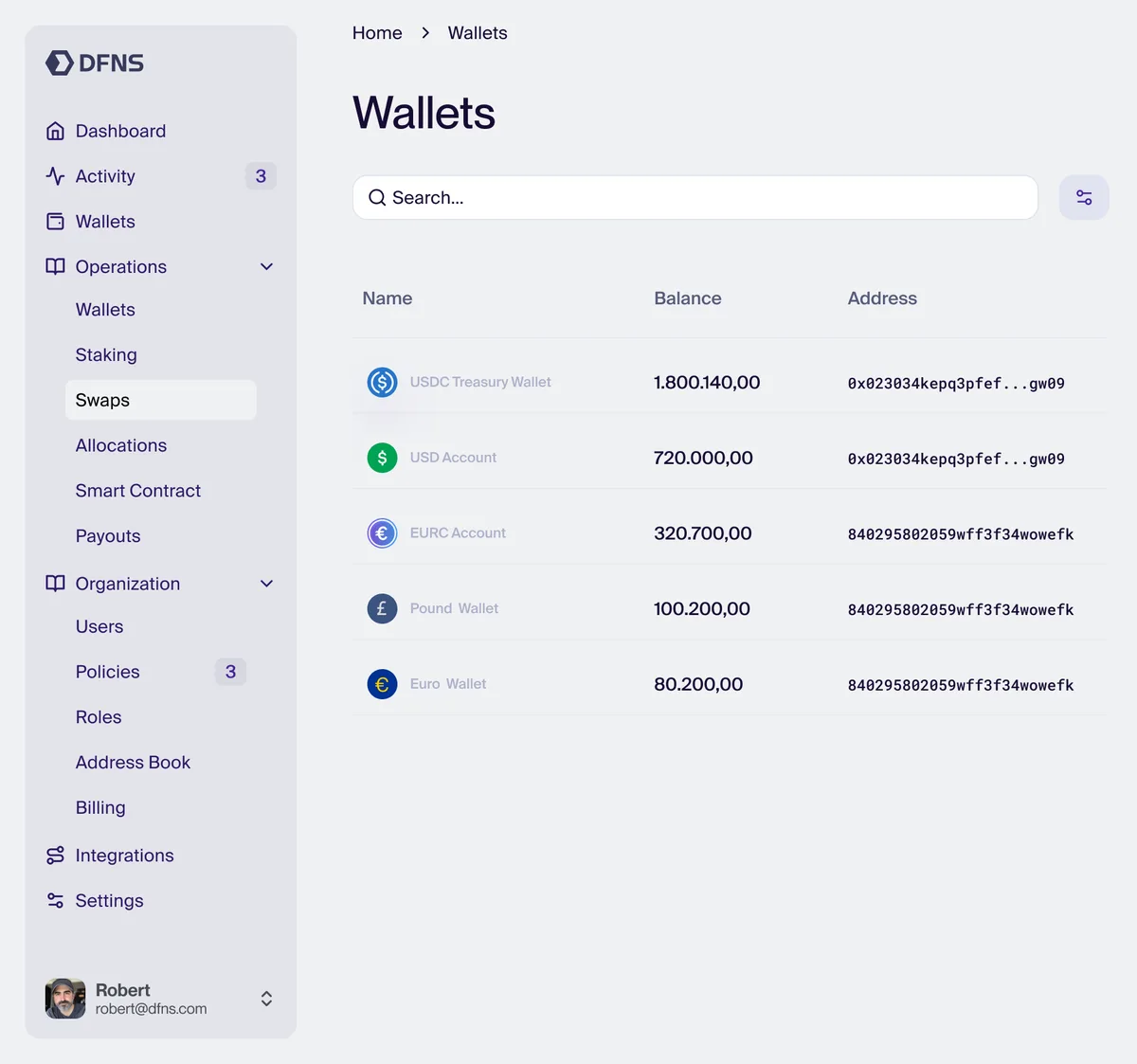
A single key derives wallets on 100+ blockchains. Same address on every EVM chain. Rotate access at the key level — it propagates everywhere.
Managed SaaS, hybrid with shares on your infrastructure, or fully on-prem. Same MPC. Same security. Your choice of deployment.
Keys are the new ledger root
The cryptographic foundation underneath every wallet, every transaction, every signature on the DFNS platform.
MPC from
the first byte
Every key is born distributed. A Threshold Signature Scheme generates independent shares across enclaved nodes. The complete key has never existed — and never will. No seed phrase to back up. No mnemonic to leak. No single point of failure to defend.
M-of-N shares required to sign. Compromise of any subset below threshold reveals nothing. Reconstruction is mathematically impossible, not just operationally restricted.
Each share is produced inside its own enclave from independent entropy. No master seed, no derivation tree, no shared origin to attack.
secp256k1, Ed25519, Stark, Schnorr/BIP-340. Every major signing curve supported. One key, every network that accepts the curve.
Shares across enclaves,
geographies, and providers
Key shares live in independent Trusted Execution Environments across geographically distributed data centers. Cloud-region failures don't take signing offline. Operator compromise at any one site reveals nothing about the key.
Shares spread across multiple regions. Continent-level outages degrade availability gracefully, not catastrophically. SLA targets 99.95%+ signing uptime.
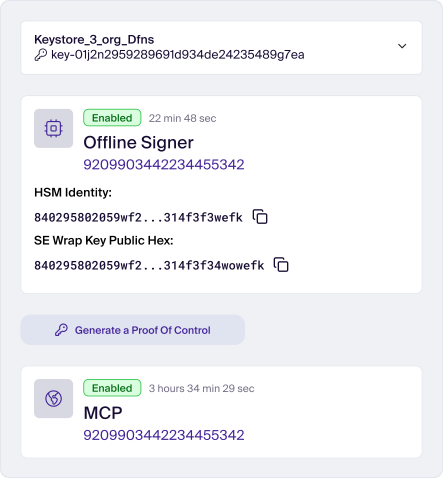
Each share is sealed inside a TEE. The host operator can't read it. The cloud provider can't read it. DFNS staff can't read it. Cryptographically, not contractually.
No single cloud provider, no single region, no single enclave. The signing quorum tolerates loss; the security model assumes some shares will be unreachable.
Keys, separated
from credentials
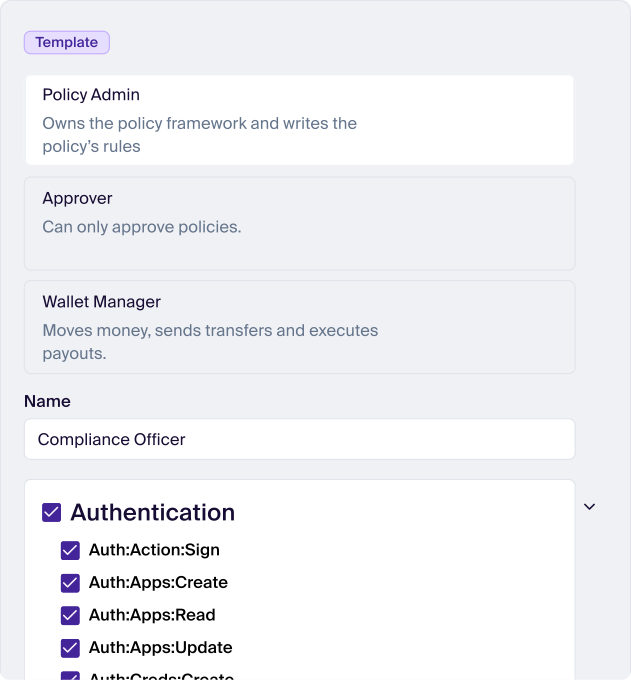
The keys that sign blockchain transactions are completely separate from the credentials that authenticate API calls. A compromised API key cannot forge a signature. A compromised passkey cannot extract a share. Two distinct security domains, two distinct attack surfaces, one unified governance model.
Passkeys and API keys authenticate intent. MPC keys authorize blockchain action. Compromise of one doesn't grant the other — even by DFNS staff.
Every signing operation runs through the policy engine. Quorums, velocity caps, allowlists, KYT. The key signs only when the policy permits.
Hold the keys for your users. Or delegate signing authority to them. Same MPC infrastructure, different custody postures. Pick per wallet, not per platform.
Your choice of
where the keys live
Managed cloud for speed. Hybrid for sovereignty. On-premises for regulation. Same MPC protocol, same security guarantees, same audited code — running where your risk appetite says it should.
All shares in DFNS-operated enclaves across multiple regions. Zero infrastructure to run. Highest deployment velocity. The default for most customers.
Some shares in DFNS enclaves, others in your cloud account or HSM. You hold a piece of the threshold. DFNS can't sign without you; you can't sign without DFNS.
Full MPC stack inside your data center or sovereign cloud. DFNS operates the software; you operate the infrastructure. For the strictest regulatory regimes.
Discover how Zodia Custody secures keys on DFNS.
“Thanks to their collaborative team and institutional-grade wallet platform, we've enhanced our operational capabilities and widened our business lines. Our security framework has also been reinforced by their state-of-the-art MPC cryptography.”
Each key exists only as MPC shares distributed across independent enclaves. The complete key is never assembled, never stored, never exportable.
No BIP-39 mnemonic. No HD derivation. No piece of paper to lose. Each key's shares are generated independently inside enclaves.
A single key derives wallets on 100+ blockchains. Same address on every EVM chain. Rotate access at the key level — it propagates everywhere.
Managed SaaS, hybrid with shares on your infrastructure, or fully on-prem. Same MPC. Same security. Your choice of deployment.
Four steps from key to signature
Generate the key. Derive wallets. Govern access. Sign safely. The same primitive whether you have one wallet or ten million.
Create a key the cryptographic way.
One API call. The MPC network generates independent shares across enclaves. No seed phrase produced. No master secret stored. The key is referenced by keyId and never exists in complete form.
// Generate an MPC key — distributed across enclaved signers from the start
const key = await dfnsApi.keys.createKey({
body: {
scheme: "ECDSA", // or "EdDSA", "Schnorr"
curve: "secp256k1", // or "ed25519", "stark"
name: "Treasury Master Key — EU Region"
}
});
// key.id, key.publicKey, key.scheme, key.curve
// The private key is split, sealed, and distributed.
// It has never existed as a complete value, and never will.One key, every chain you operate on.
Reference the same keyId to derive wallets on any compatible network. Same address on every EVM chain. Different address on Bitcoin or Solana, same underlying key. Rotate access once, propagate everywhere.
// Same key — wallets on Ethereum, Polygon, Base, Arbitrum, etc.
const ethereum = await dfnsApi.wallets.createWallet({
body: { network: "Ethereum", signingKey: { id: key.id }, name: "Treasury — ETH" }
});
const polygon = await dfnsApi.wallets.createWallet({
body: { network: "Polygon", signingKey: { id: key.id }, name: "Treasury — MATIC" }
});
// ethereum.address === polygon.address — same key, same EVM address
// On Bitcoin or Solana, different address derivation, same underlying keySeparate authentication from signing.
Passkeys and API credentials authenticate the request. MPC shares authorize the signature. Compromise of one doesn't compromise the other. Layer policies on top — quorums, limits, allowlists.
// Authenticate the request with a passkey-signed user action
const userActionSignature = await dfnsApi.auth.signUserAction({
challenge,
credential: await navigator.credentials.get({ publicKey: { challenge } })
});
// Sign a payload — the policy engine evaluates BEFORE the MPC network signs
const signature = await dfnsApi.keys.generateSignature({
keyId: key.id,
body: {
kind: "Hash",
hash: "0xabc...def" // 32-byte hash to sign
},
userActionSignature
});
// Authentication credential ≠ signing key. Two domains, two attack surfaces.
// Compromise of either alone signs nothing.Pick where the shares live.
Managed SaaS for speed. Hybrid cloud when sovereignty matters. On-premises when regulation requires it. Same MPC protocol, same audited code, your choice of where the enclaves run.
// Managed SaaS — the default. All shares in Dfns enclaves.
const dfnsApi = new DfnsApiClient({
baseUrl: "https://api.dfns.io",
// ...
});
// Hybrid — you hold one or more shares in your own infrastructure
// Configured during onboarding; the signing flow is otherwise identical
// Dfns cannot sign without your share; you cannot sign without Dfns
// On-premises — entire MPC stack inside your data center
// Same SDK, different base URL, full operational control
const onPremApi = new DfnsApiClient({
baseUrl: "https://dfns.your-bank.internal",
// ...
});Ready to see DFNS in action?
The new core for every fintech and institution going onchain.
Documentation
APIs, SDKs, and guides for builders.
Pricing
Per-transaction pricing, no hidden fees.